Breaking The Webpage
Breaking The Webpage
Breaking The Webpage
A website is the virtual handshake of the digital world, a crucial interface where users decide to engage or disengage within seconds. As Eric Kenedy eloquently puts it in his talk on landing page technique, “A landing page is akin to a sales pitch where the designer is blindfolded while delivering the speech, and the prospects have duct tape over their mouths, preventing them from asking questions”. In this scenario, designers must recognize the critical nature of their task — converting a user to a customer in a mere 5 seconds.
Making of the Hero-section
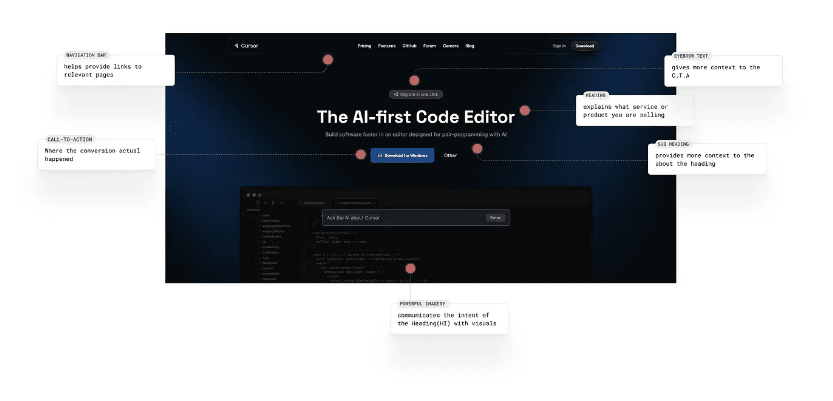
The Hero sections are undeniably the most crucial part of a website. this is where the conversation happens, this is what determines if the user stays or leaves. let’s break down its components
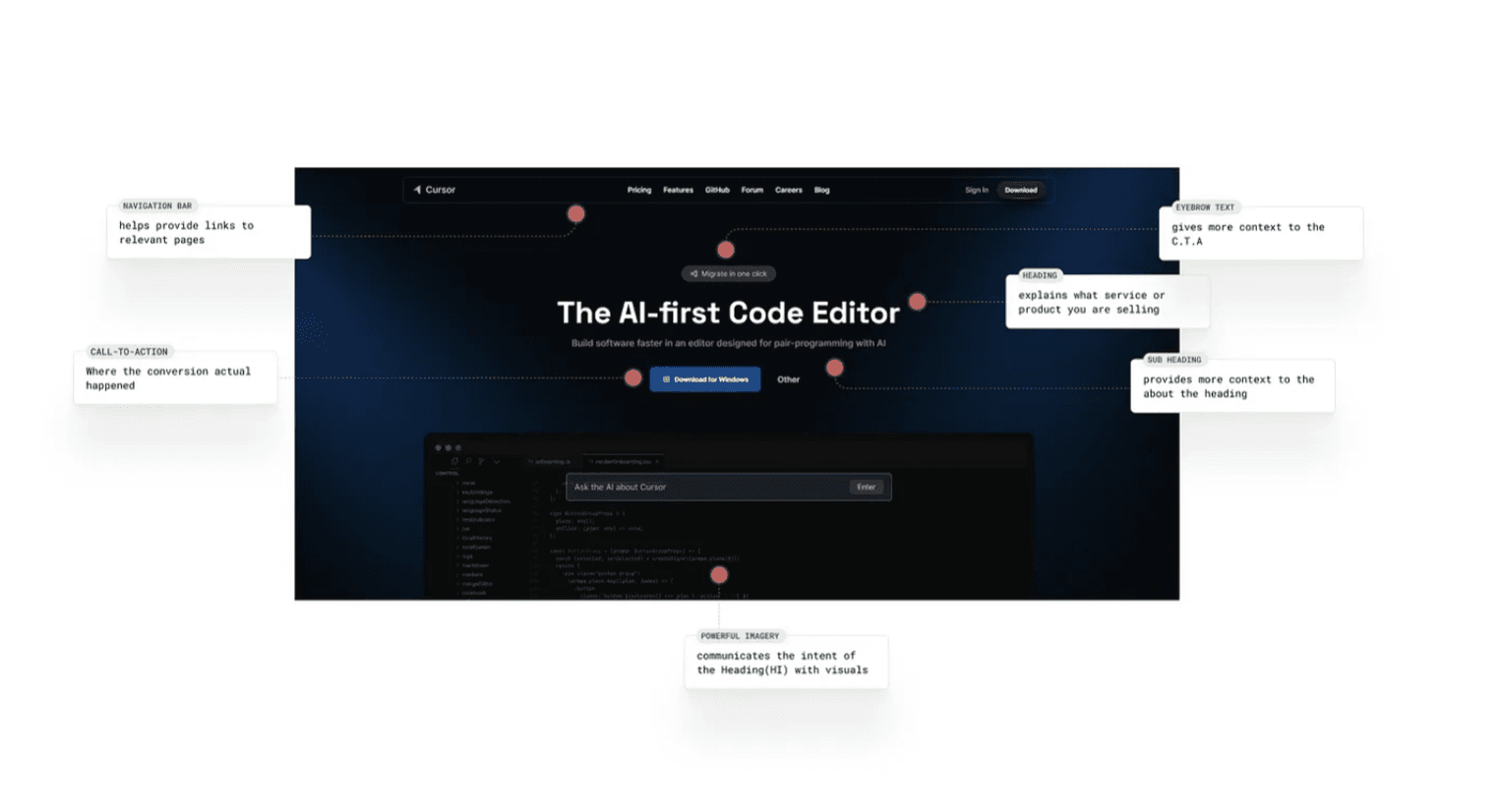
Hero section (Above the fold) breakdown
Navigation Bar
This element aids users in navigating through other pages of the website.
Subheading:
Positioned just below the heading, the subheading provides additional context, elaborating on the core message conveyed by the heading.
Eyebrow Text
Provides additional context to the Call-to-Action (CTA), guiding users toward the desired action.
Powerful Imagery
The hero section is incomplete without compelling visuals. Powerful imagery communicates the intent of the Heading (H1) with visuals, capturing attention and guiding users through a visual narrative.
C.T.A
This is the epicentre of conversion. It’s where the magic happens — where users commit to the desired action, whether it’s making a purchase, signing up, or initiating contact.
9 Rules of Engagement
The cornerstone of any successful website is a clear understanding of the conversion goal. Whether it’s making a purchase, starting a trial, or initiating contact with the sales team, every element on the page should work harmoniously towards this objective. let’s dive into what constitutes a successful website
1. Aligning Design with Brand Identity
On the brand front, start by compiling a list of adjectives and phrases that define your brand. This foundation informs both the textual and visual aspects of your website, ensuring a cohesive and resonant user experience.
2. The Symbiotic Relationship: Text and Design
The relationship between text and design is symbiotic — each informs and complements the other. The carefully crafted text should guide the design choices, and conversely, a well-designed page should enhance the impact of the text.
3. The 5-Second Challenge
In the digital arena, you have a mere 5 seconds to convince users that your landing page is worth their time. The headline plays a pivotal role in this, serving as the initial hook. If users can’t identify themselves as your target audience in this short span, you risk losing them.
4. The Power of Headlines
The headline is the first battleground in the war for user attention. Crafting a compelling headline that succinctly communicates the greatest value your product offers is paramount. The subheader follows closely behind, reinforcing the message and enticing users to explore further.
5. Strategic Placement of “Ahh Haa” Features
Place the most impactful features higher up on your web sections. Whether it’s a stunning visual, a compelling statement, or a unique feature, strategically position elements that elicit the “ahh haa” moments to captivate users from the start.
6. Teasing Continuation
providing users with glimpses of what lies beyond the current point of engagement, inviting them to delve deeper into the content or journey offered by the website.
One effective way to tease continuation is through strategic content placement. By presenting compelling snippets, partial information, or intriguing visuals, designers can pique the user’s curiosity, encouraging them to click, scroll, or interact to unveil the complete story. This method not only sustains interest but also guides users through a thoughtfully curated narrative.
Incorporating subtle cues, such as clickable elements, animated transitions, or interactive features, can act as invitations for users to explore further. These cues serve as digital signposts, subtly suggesting that there is more to discover beyond the current point
7. Engaging Imagery Motion
Quality imagery is more than aesthetics; it’s a persuasive tool. In the realm of web design, engaging imagery plays a pivotal role in conveying the essence of a product, service, or brand. It goes beyond mere aesthetics, serving as a powerful tool to communicate messages, evoke emotions, and guide users through a visual narrative.The goal is to create a seamless and immersive user experience that not only attracts attention but also sustains it. Opt for clear paths of motion, such as a V-shaped hero imagery motion or a linear imagery motion to guide users seamlessly through your page.
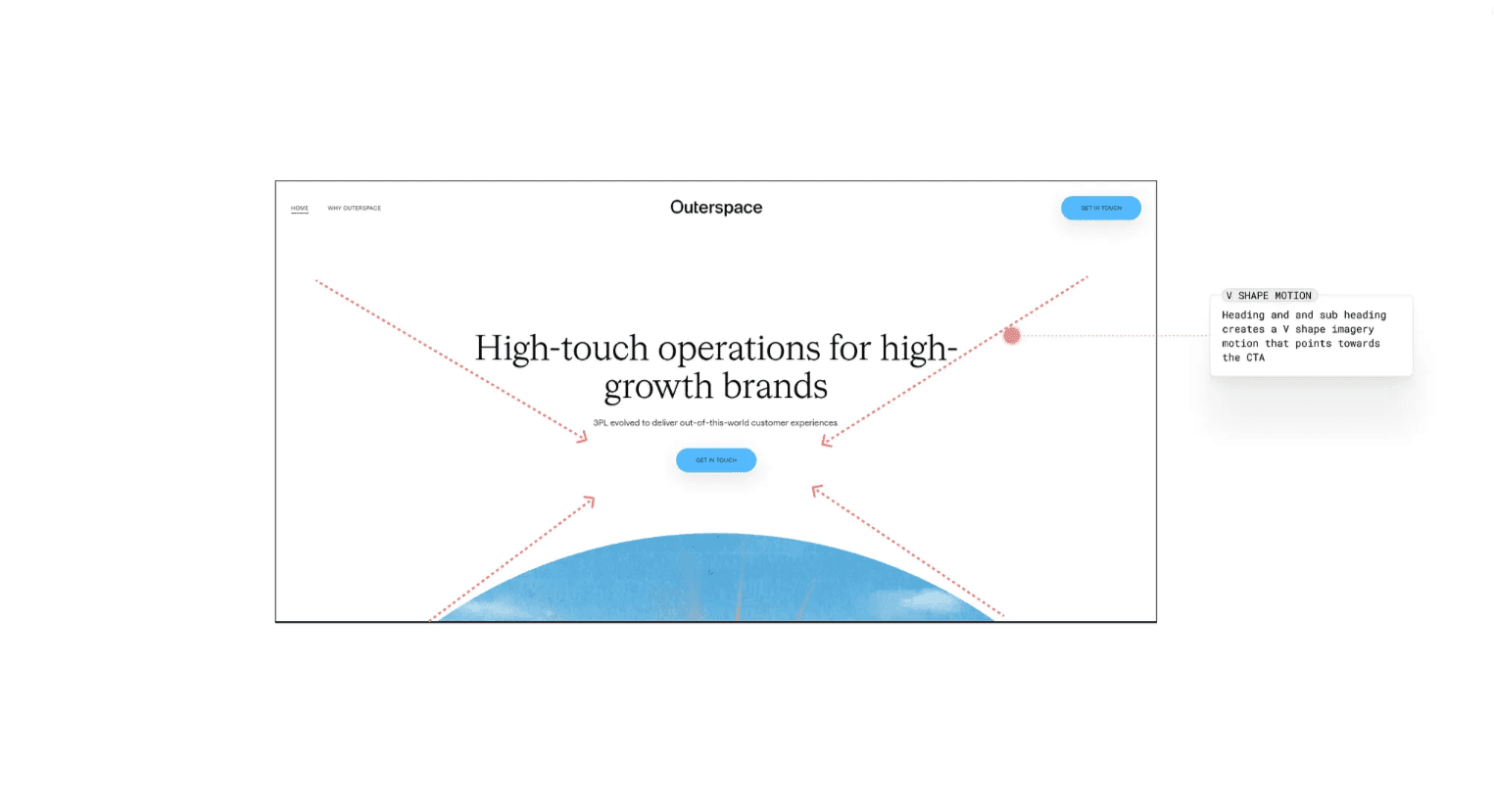
The V-shaped hero section imagery motion. website reference:outerspace.com
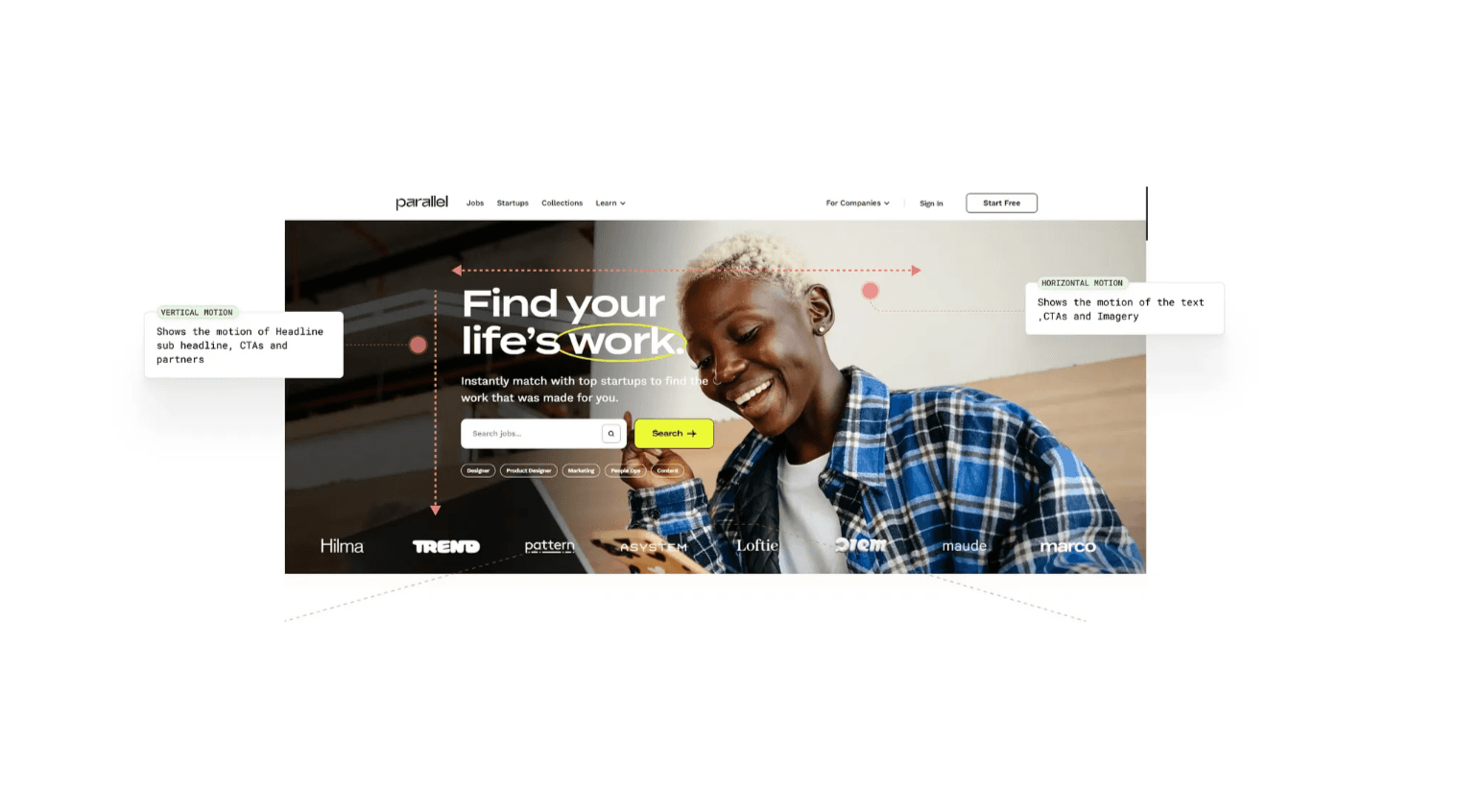
The linear-shaped hero section imagery motion website reference:useparallel.com
8. Intentional Chaos
For each segment of the webpage, designers always re-emphasize the same service by employing diverse adjectives, wordplay, layout and visuals to create an engaging experience that retains the user’s interest. This should sometimes challenge conventional design norms, such as breaking or bumping up text or images out of frames or alignments.
Introducing a new colour palette, or utilizing highly contrasting colours to add a refreshing touch. offering users a glimpse of something novel. While the human eye naturally craves visual symmetry, maintaining alignment is crucial. It’s essential to recognize that this deliberate introduction of controlled chaos should be applied sparingly, ensuring a balanced and harmonious overall design.
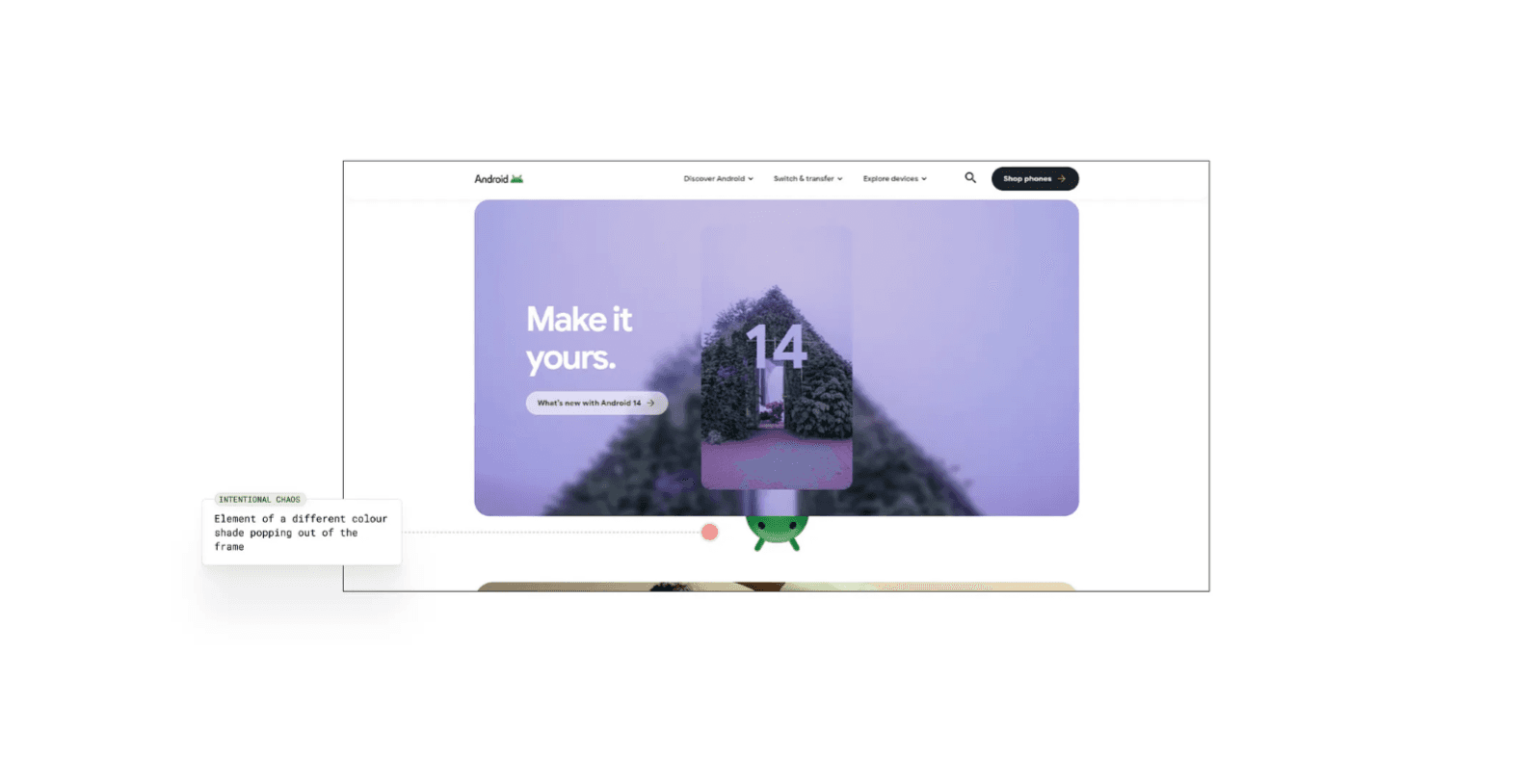
Intentional chaos applied. website reference: android.com
9. Intrigue with animations
Animations involve the thoughtful incorporation of movement to draw attention to specific elements on a webpage. This can include the gradual unveiling of content, the subtle highlighting of key features, or the use of dynamic effects to emphasize certain sections. These animations serve not only as eye-catching embellishments but also as functional elements that guide users through the narrative of the webpage.
Furthermore, animations can be employed to create a sense of continuity between different sections of a webpage. Seamless transitions between content blocks or the use of scroll-triggered animations can contribute to a cohesive and fluid user experience, making the journey through the page more intuitive and enjoyable.
It’s essential to strike a balance with animations, ensuring they enhance the user experience without becoming distracting or overwhelming. Subtle and purposeful animations can add a layer of sophistication to the design, providing users with a visually stimulating and memorable interaction.
Footing the conclusion
In crafting a compelling webpage, designers must navigate the delicate balance between creativity and clarity. The virtual handshake of the digital world, demands a strategic approach to capture and retain user interest within the critical 5-second window. From the impactful hero section, where engaging imagery and intentional chaos reign, to the seamless Ux copies, transitions, and animations that guide users through the narrative, every element plays a crucial role. By thoughtfully challenging design norms, employing diverse adjectives, and introducing fresh elements, web designers can create an immersive experience that not only captivates but persuades users toward conversion.
A website is the virtual handshake of the digital world, a crucial interface where users decide to engage or disengage within seconds. As Eric Kenedy eloquently puts it in his talk on landing page technique, “A landing page is akin to a sales pitch where the designer is blindfolded while delivering the speech, and the prospects have duct tape over their mouths, preventing them from asking questions”. In this scenario, designers must recognize the critical nature of their task — converting a user to a customer in a mere 5 seconds.
Making of the Hero-section
The Hero sections are undeniably the most crucial part of a website. this is where the conversation happens, this is what determines if the user stays or leaves. let’s break down its components
Hero section (Above the fold) breakdown
Navigation Bar
This element aids users in navigating through other pages of the website.
Subheading:
Positioned just below the heading, the subheading provides additional context, elaborating on the core message conveyed by the heading.
Eyebrow Text
Provides additional context to the Call-to-Action (CTA), guiding users toward the desired action.
Powerful Imagery
The hero section is incomplete without compelling visuals. Powerful imagery communicates the intent of the Heading (H1) with visuals, capturing attention and guiding users through a visual narrative.
C.T.A
This is the epicentre of conversion. It’s where the magic happens — where users commit to the desired action, whether it’s making a purchase, signing up, or initiating contact.
9 Rules of Engagement
The cornerstone of any successful website is a clear understanding of the conversion goal. Whether it’s making a purchase, starting a trial, or initiating contact with the sales team, every element on the page should work harmoniously towards this objective. let’s dive into what constitutes a successful website
1. Aligning Design with Brand Identity
On the brand front, start by compiling a list of adjectives and phrases that define your brand. This foundation informs both the textual and visual aspects of your website, ensuring a cohesive and resonant user experience.
2. The Symbiotic Relationship: Text and Design
The relationship between text and design is symbiotic — each informs and complements the other. The carefully crafted text should guide the design choices, and conversely, a well-designed page should enhance the impact of the text.
3. The 5-Second Challenge
In the digital arena, you have a mere 5 seconds to convince users that your landing page is worth their time. The headline plays a pivotal role in this, serving as the initial hook. If users can’t identify themselves as your target audience in this short span, you risk losing them.
4. The Power of Headlines
The headline is the first battleground in the war for user attention. Crafting a compelling headline that succinctly communicates the greatest value your product offers is paramount. The subheader follows closely behind, reinforcing the message and enticing users to explore further.
5. Strategic Placement of “Ahh Haa” Features
Place the most impactful features higher up on your web sections. Whether it’s a stunning visual, a compelling statement, or a unique feature, strategically position elements that elicit the “ahh haa” moments to captivate users from the start.
6. Teasing Continuation
providing users with glimpses of what lies beyond the current point of engagement, inviting them to delve deeper into the content or journey offered by the website.
One effective way to tease continuation is through strategic content placement. By presenting compelling snippets, partial information, or intriguing visuals, designers can pique the user’s curiosity, encouraging them to click, scroll, or interact to unveil the complete story. This method not only sustains interest but also guides users through a thoughtfully curated narrative.
Incorporating subtle cues, such as clickable elements, animated transitions, or interactive features, can act as invitations for users to explore further. These cues serve as digital signposts, subtly suggesting that there is more to discover beyond the current point
7. Engaging Imagery Motion
Quality imagery is more than aesthetics; it’s a persuasive tool. In the realm of web design, engaging imagery plays a pivotal role in conveying the essence of a product, service, or brand. It goes beyond mere aesthetics, serving as a powerful tool to communicate messages, evoke emotions, and guide users through a visual narrative.The goal is to create a seamless and immersive user experience that not only attracts attention but also sustains it. Opt for clear paths of motion, such as a V-shaped hero imagery motion or a linear imagery motion to guide users seamlessly through your page.
The V-shaped hero section imagery motion. website reference:outerspace.com
The linear-shaped hero section imagery motion website reference:useparallel.com
8. Intentional Chaos
For each segment of the webpage, designers always re-emphasize the same service by employing diverse adjectives, wordplay, layout and visuals to create an engaging experience that retains the user’s interest. This should sometimes challenge conventional design norms, such as breaking or bumping up text or images out of frames or alignments.
Introducing a new colour palette, or utilizing highly contrasting colours to add a refreshing touch. offering users a glimpse of something novel. While the human eye naturally craves visual symmetry, maintaining alignment is crucial. It’s essential to recognize that this deliberate introduction of controlled chaos should be applied sparingly, ensuring a balanced and harmonious overall design.
Intentional chaos applied. website reference: android.com
9. Intrigue with animations
Animations involve the thoughtful incorporation of movement to draw attention to specific elements on a webpage. This can include the gradual unveiling of content, the subtle highlighting of key features, or the use of dynamic effects to emphasize certain sections. These animations serve not only as eye-catching embellishments but also as functional elements that guide users through the narrative of the webpage.
Furthermore, animations can be employed to create a sense of continuity between different sections of a webpage. Seamless transitions between content blocks or the use of scroll-triggered animations can contribute to a cohesive and fluid user experience, making the journey through the page more intuitive and enjoyable.
It’s essential to strike a balance with animations, ensuring they enhance the user experience without becoming distracting or overwhelming. Subtle and purposeful animations can add a layer of sophistication to the design, providing users with a visually stimulating and memorable interaction.
Footing the conclusion
In crafting a compelling webpage, designers must navigate the delicate balance between creativity and clarity. The virtual handshake of the digital world, demands a strategic approach to capture and retain user interest within the critical 5-second window. From the impactful hero section, where engaging imagery and intentional chaos reign, to the seamless Ux copies, transitions, and animations that guide users through the narrative, every element plays a crucial role. By thoughtfully challenging design norms, employing diverse adjectives, and introducing fresh elements, web designers can create an immersive experience that not only captivates but persuades users toward conversion.
A website is the virtual handshake of the digital world, a crucial interface where users decide to engage or disengage within seconds. As Eric Kenedy eloquently puts it in his talk on landing page technique, “A landing page is akin to a sales pitch where the designer is blindfolded while delivering the speech, and the prospects have duct tape over their mouths, preventing them from asking questions”. In this scenario, designers must recognize the critical nature of their task — converting a user to a customer in a mere 5 seconds.
Making of the Hero-section
The Hero sections are undeniably the most crucial part of a website. this is where the conversation happens, this is what determines if the user stays or leaves. let’s break down its components
Hero section (Above the fold) breakdown
Navigation Bar
This element aids users in navigating through other pages of the website.
Subheading:
Positioned just below the heading, the subheading provides additional context, elaborating on the core message conveyed by the heading.
Eyebrow Text
Provides additional context to the Call-to-Action (CTA), guiding users toward the desired action.
Powerful Imagery
The hero section is incomplete without compelling visuals. Powerful imagery communicates the intent of the Heading (H1) with visuals, capturing attention and guiding users through a visual narrative.
C.T.A
This is the epicentre of conversion. It’s where the magic happens — where users commit to the desired action, whether it’s making a purchase, signing up, or initiating contact.
9 Rules of Engagement
The cornerstone of any successful website is a clear understanding of the conversion goal. Whether it’s making a purchase, starting a trial, or initiating contact with the sales team, every element on the page should work harmoniously towards this objective. let’s dive into what constitutes a successful website
1. Aligning Design with Brand Identity
On the brand front, start by compiling a list of adjectives and phrases that define your brand. This foundation informs both the textual and visual aspects of your website, ensuring a cohesive and resonant user experience.
2. The Symbiotic Relationship: Text and Design
The relationship between text and design is symbiotic — each informs and complements the other. The carefully crafted text should guide the design choices, and conversely, a well-designed page should enhance the impact of the text.
3. The 5-Second Challenge
In the digital arena, you have a mere 5 seconds to convince users that your landing page is worth their time. The headline plays a pivotal role in this, serving as the initial hook. If users can’t identify themselves as your target audience in this short span, you risk losing them.
4. The Power of Headlines
The headline is the first battleground in the war for user attention. Crafting a compelling headline that succinctly communicates the greatest value your product offers is paramount. The subheader follows closely behind, reinforcing the message and enticing users to explore further.
5. Strategic Placement of “Ahh Haa” Features
Place the most impactful features higher up on your web sections. Whether it’s a stunning visual, a compelling statement, or a unique feature, strategically position elements that elicit the “ahh haa” moments to captivate users from the start.
6. Teasing Continuation
providing users with glimpses of what lies beyond the current point of engagement, inviting them to delve deeper into the content or journey offered by the website.
One effective way to tease continuation is through strategic content placement. By presenting compelling snippets, partial information, or intriguing visuals, designers can pique the user’s curiosity, encouraging them to click, scroll, or interact to unveil the complete story. This method not only sustains interest but also guides users through a thoughtfully curated narrative.
Incorporating subtle cues, such as clickable elements, animated transitions, or interactive features, can act as invitations for users to explore further. These cues serve as digital signposts, subtly suggesting that there is more to discover beyond the current point
7. Engaging Imagery Motion
Quality imagery is more than aesthetics; it’s a persuasive tool. In the realm of web design, engaging imagery plays a pivotal role in conveying the essence of a product, service, or brand. It goes beyond mere aesthetics, serving as a powerful tool to communicate messages, evoke emotions, and guide users through a visual narrative.The goal is to create a seamless and immersive user experience that not only attracts attention but also sustains it. Opt for clear paths of motion, such as a V-shaped hero imagery motion or a linear imagery motion to guide users seamlessly through your page.
The V-shaped hero section imagery motion. website reference:outerspace.com
The linear-shaped hero section imagery motion website reference:useparallel.com
8. Intentional Chaos
For each segment of the webpage, designers always re-emphasize the same service by employing diverse adjectives, wordplay, layout and visuals to create an engaging experience that retains the user’s interest. This should sometimes challenge conventional design norms, such as breaking or bumping up text or images out of frames or alignments.
Introducing a new colour palette, or utilizing highly contrasting colours to add a refreshing touch. offering users a glimpse of something novel. While the human eye naturally craves visual symmetry, maintaining alignment is crucial. It’s essential to recognize that this deliberate introduction of controlled chaos should be applied sparingly, ensuring a balanced and harmonious overall design.
Intentional chaos applied. website reference: android.com
9. Intrigue with animations
Animations involve the thoughtful incorporation of movement to draw attention to specific elements on a webpage. This can include the gradual unveiling of content, the subtle highlighting of key features, or the use of dynamic effects to emphasize certain sections. These animations serve not only as eye-catching embellishments but also as functional elements that guide users through the narrative of the webpage.
Furthermore, animations can be employed to create a sense of continuity between different sections of a webpage. Seamless transitions between content blocks or the use of scroll-triggered animations can contribute to a cohesive and fluid user experience, making the journey through the page more intuitive and enjoyable.
It’s essential to strike a balance with animations, ensuring they enhance the user experience without becoming distracting or overwhelming. Subtle and purposeful animations can add a layer of sophistication to the design, providing users with a visually stimulating and memorable interaction.
Footing the conclusion
In crafting a compelling webpage, designers must navigate the delicate balance between creativity and clarity. The virtual handshake of the digital world, demands a strategic approach to capture and retain user interest within the critical 5-second window. From the impactful hero section, where engaging imagery and intentional chaos reign, to the seamless Ux copies, transitions, and animations that guide users through the narrative, every element plays a crucial role. By thoughtfully challenging design norms, employing diverse adjectives, and introducing fresh elements, web designers can create an immersive experience that not only captivates but persuades users toward conversion.
Category
Design
Category
Design
Category
Design
Publish at:
Nov 14, 2023
Publish at:
Nov 14, 2023
Publish at:
Nov 14, 2023
Read:
6 minutes
Read:
6 minutes
Read:
6 minutes
You might also like
Stay ahead with 1K+ Readers!
Subscribe today, enjoy my top 5 articles, and never miss out on a new post with instant Notifications.
Stay ahead with 1K+ Readers!
Subscribe today, enjoy my top 5 articles, and never miss out on a new post with instant Notifications.
Stay ahead with 1K+ Readers!
Subscribe today, enjoy my top 5 articles, and never miss out on a new post with instant Notifications.
Design and Developed by Samuel Alex
Dribbble
Design and Developed by Samuel Alex
Dribbble
Design and Developed by Samuel Alex
Dribbble